Still Reselling Products That Aren’t Yours? Here’s How to Build a Brand You Own Around
Just One Product
The One Product Method: a simple framework to find, validate, and launch your first product without blowing your savings or guessing what will sell.
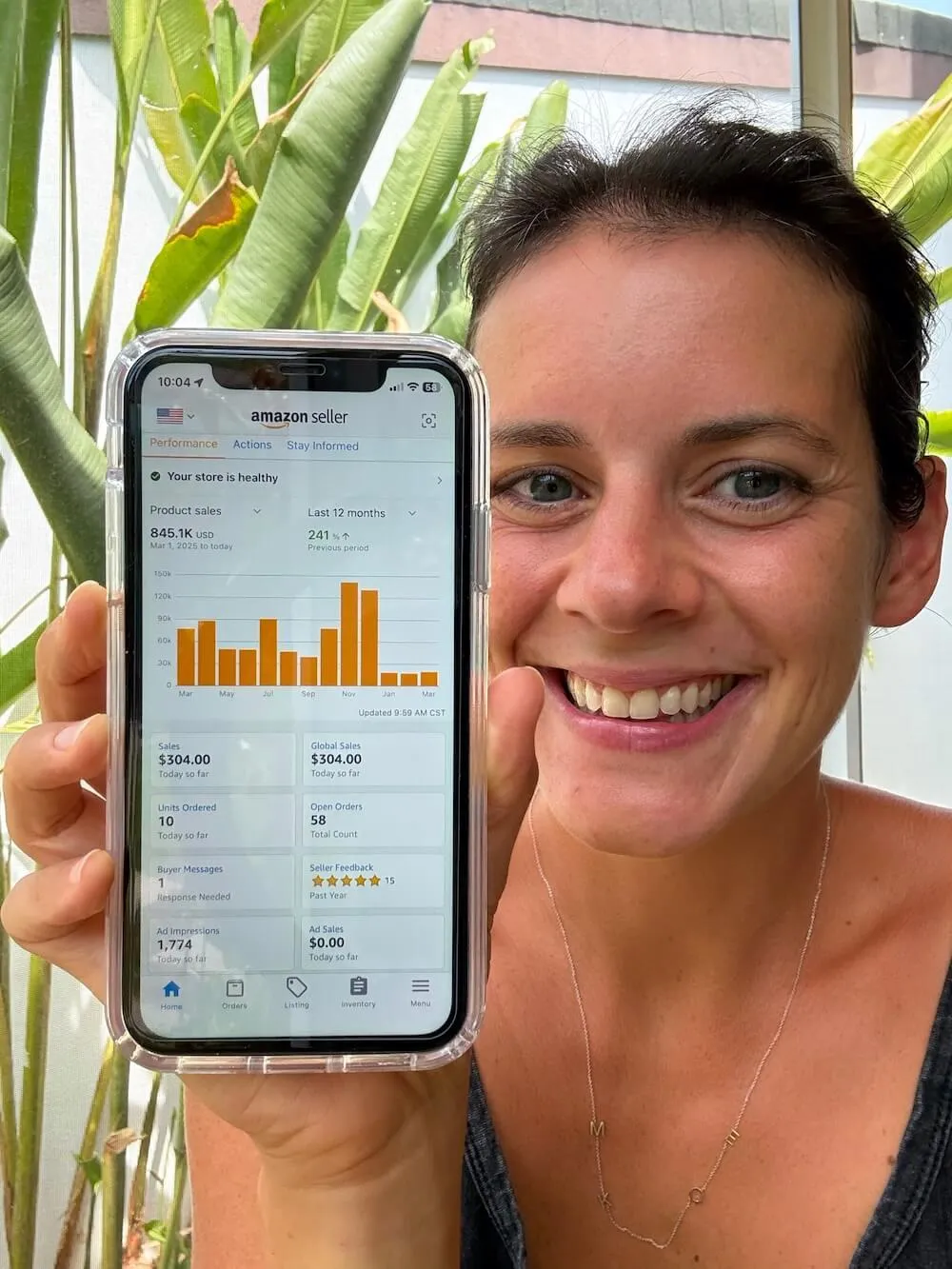
Mom of two, former arbitrage seller, now running an $850K Amazon brand from Costa Rica.
(Not an influencer. Just a real actual human being who finally figured out a better way.)
You already know how to make money on Amazon. That's not the problem.
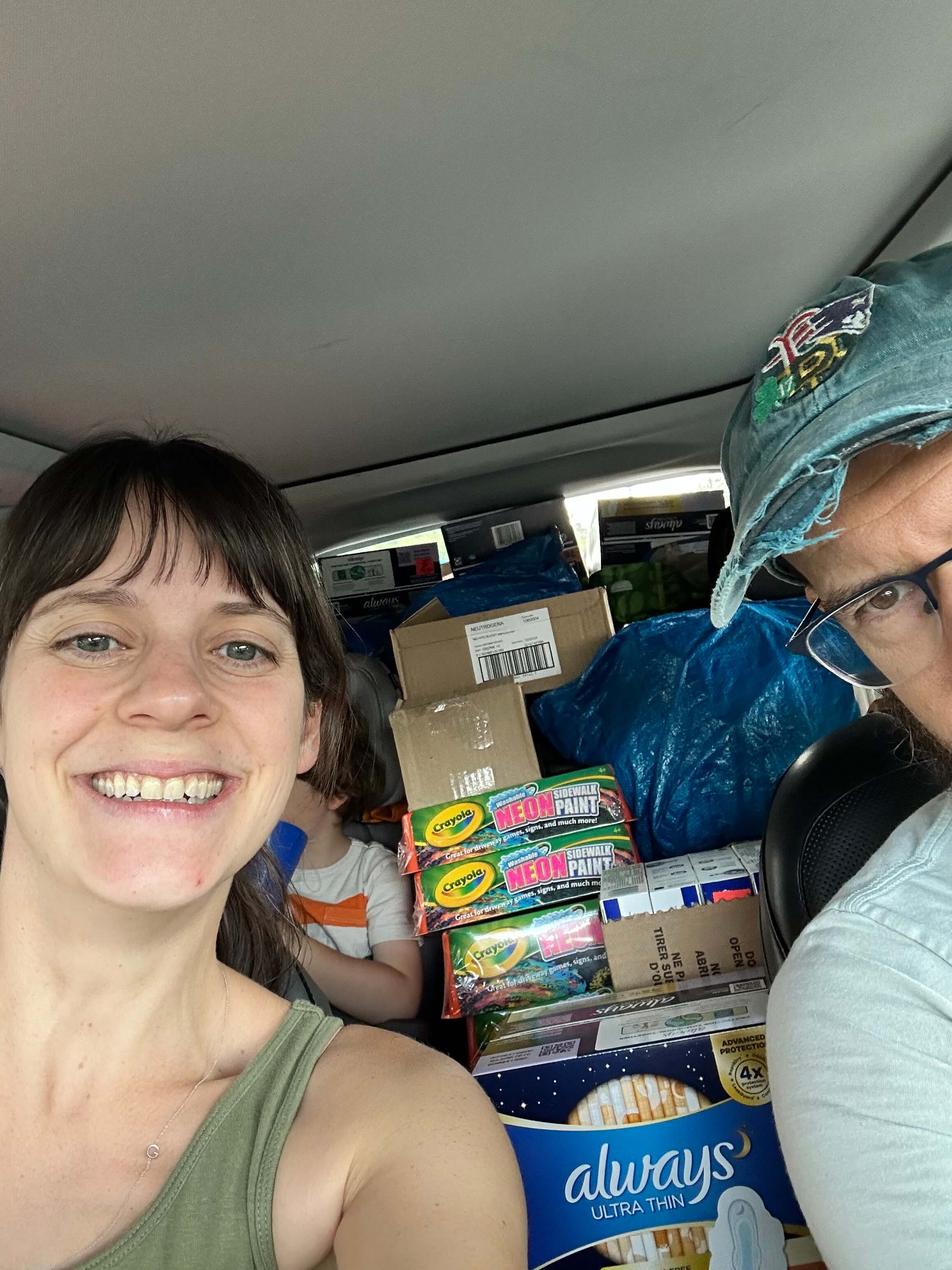
The problem is that the second you stop scanning, sourcing, peeling stickers, and shipping boxes… the money stops too. And somewhere between your third Ollie's run of the week and your fourteenth hour staring at a Keepa chart, you started wondering if this is actually the freedom you signed up for.
It's not. But deep down, you already knew that.
What if there was a method (built by someone who's been exactly where you are) that let you transition from reselling someone else's products to owning a brand that's yours?
The same method used by private label sellers who've left the arbitrage grind behind for good.
But with one unusual twist that changes everything: instead of starting with a spreadsheet, you start with yourself.
This won't take long to explain. (About the time it takes to peel stickers off a haul from Ollie's. So, three hours. Just kidding. More like six minutes.)
Arbitrage Has a Dirty Secret None Us Want To Admit
You started Amazon FBA because you wanted freedom. Time freedom. Financial freedom. The kind of freedom where you're not chained to a desk, a boss, or a commute.
And then somewhere between the SellerAmp sourcing sessions and poring over Keepa charts and the third trip to Ross in a week, you realized something uncomfortable:
You didn't escape the grind. You just renamed it.
No sourcing sessions? No income. No sticker peeling? No income. No Keepa stalking at 11pm? Someone undercuts you by $2 and takes the Buy Box while you sleep.
But here's the math nobody puts in the YouTube thumbnail:
Arbitrage income is 100% active. You stop, it stops. The margins that looked great at 25–30% start evaporating the second you account for Amazon fees, storage, returns, and the inevitable race to the bottom the moment one competitor flinches on price.
Without your own brand, you will be:
- Permanently tied to your phone, your scanner, and your sourcing route
- Competing on price against people who will always be willing to go lower
- Building zero equity. Nothing you could ever sell, nothing that compounds, nothing that grows while you're living your life
- Completely at the mercy of Keepa charts that can drop it like it's hot any given Tuesday
And this is true:
Even if you're making decent money right now.
Even if you've found some great ASINs and had a few really good months.
Even if you're more organized, more efficient, and more disciplined than 90% of other arbitrage sellers out there.
Even if you've never designed a product in your life, don't think of yourself as creative, and have been telling yourself that Amazon is just a side hustle not a real business.
The model has a ceiling. And the ceiling is you. Your time, your hustle, your effort.
But here's what changes everything
There's a method... I call it the One Product Method, that flips the entire model on its head.
Instead of asking "what's selling on Amazon right now?" it starts with a different question: "What do I know better than most people?"
That one shift is the difference between launching a generic me-too product into a crowded category and praying for reviews... and building something genuinely differentiated that customers actually go looking for.
The unusual part? Your unfair advantage is almost certainly something you've been completely ignoring. Something that feels too obvious, too familiar, too normal to count as special. (Spoiler alert: that's exactly why it works.)
Hi, I'm Kim.
Just a mom who got tired of the arbitrage grind and needed a way out (okay fine, a toy-obsessed mom... three kids if you count me). I'd spent years working in the toy industry, but honestly only one part of that actually mattered when I built my first product. I knew exactly what makes a kids toy safe to sell. That was my whole edge. Not some big industry secret. Just one specific (and honestly so boring it would put you to tears) thing I understood better than most people selling on Amazon.
I spent years trying to build side income that actually stuck. Nothing worked until I stopped chasing spreadsheets and started building from what I actually knew.
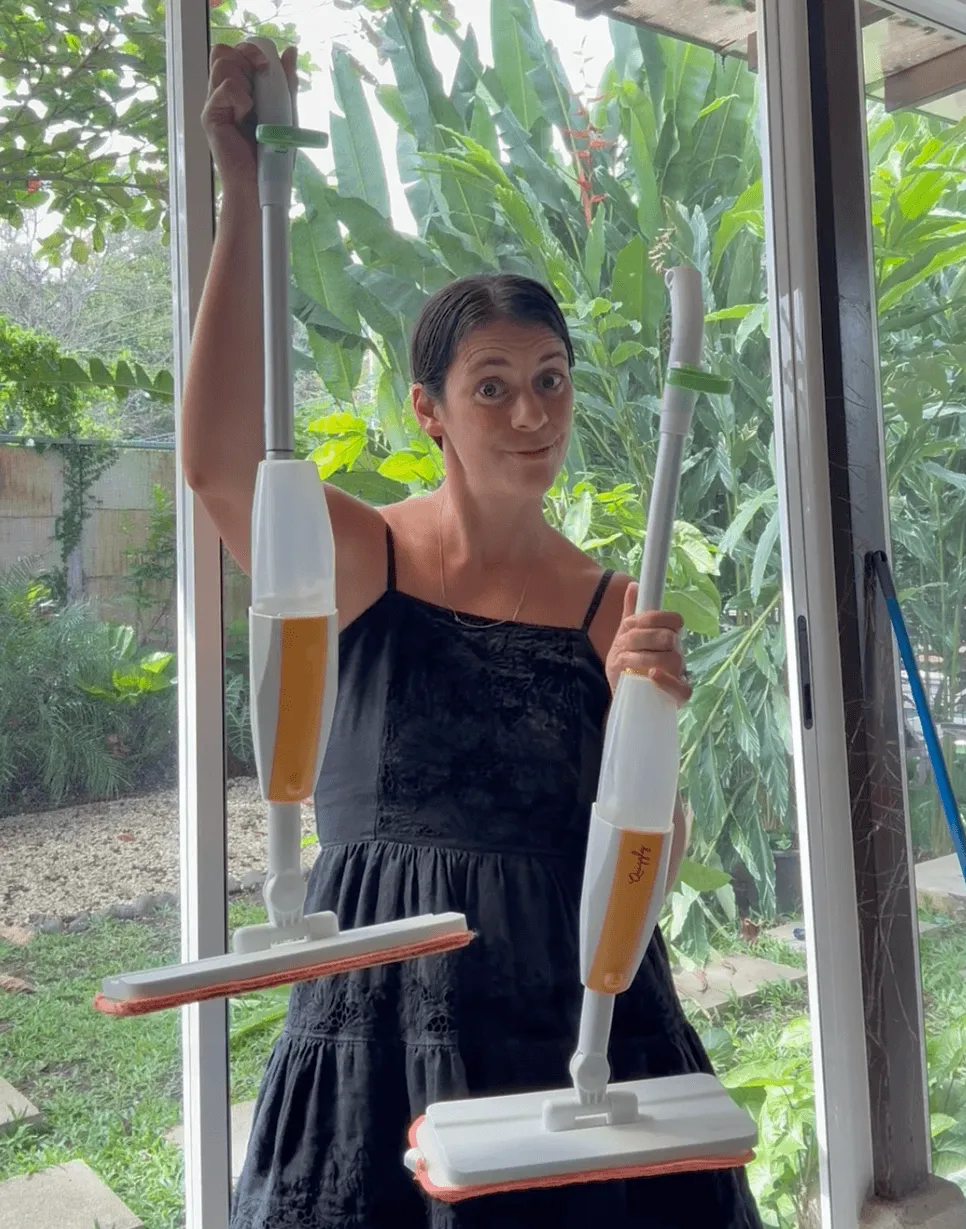
After my second child was born, I was done with arbitrage. I worked every night after my 9-to-5 to build one product, a toy spray mop for kids, using everything I'd learned designing and marketing toys for a decade.
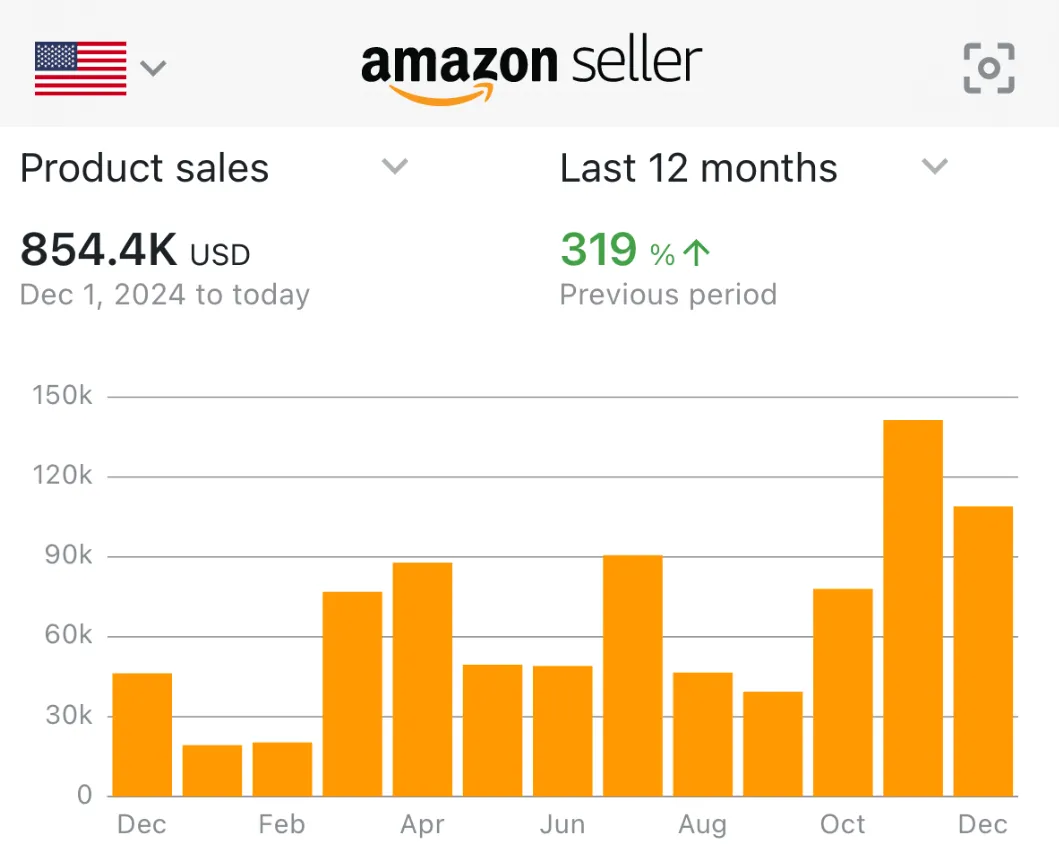
That one product sold over 23,000 units in its first year.
Today my brand does $850,000 a year on Amazon. It runs while I homeschool my kids in the morning, walk to the bodega here in Costa Rica, and go to the beach every afternoon. I even leave my phone on the counter at home because nothing breaks when I do.
Not because I'm special. Because I used the right method. And just so we're clear, this had nothing to do with my engineering background. I didn't design the mop myself. I figured out where the demand was, found a gap nobody was filling, and then found people to make the thing. That's it. You don't need to be creative. You don't need a product background. You just need to know how to find the gap and fill it.
The Proof Is
In The Model
The toy spray mop worked because it passed three filters that most product ideas fail:
Filter 1: I had an unfair advantage. I knew exactly what toy safety standards require and how parents actually think about kids doing chores. Not because I'm some industry genius... just because I'd spent years in that world and that one specific thing stuck. That's it. That's all it took.
Filter 2: There was a real market gap. Every toy cleaning tool on Amazon was basically just a decoration. Nothing actually functioned.
Filter 3: The margin math worked before I ever talked to a supplier.
Three pillars. In the right order.
That's the One Product Method. And I built an entire ebook around teaching it to you... because doing this right in the first 30 days is the thing that determines whether private label changes your life or just becomes another expensive lesson. (And let's be honest, you don't need an expensive lesson.)
Three Pillars.
In The Right Order.
Honestly? It's my way or the highway on this one.
Pillar 1: Unfair Advantage. You start with what you already know better than most people. Not what's trending. Not what some guru told you to sell. What you actually know. That's your moat.
Pillar 2: Market Gap. There has to be real unmet demand. People are already searching for something and can't find it. The reviews on existing products are basically a complaint thread about everything they wish was different. That's legit your opening.
Pillar 3: Margin Math. Before you talk to a single supplier, you run the numbers. If fuzzy math doesn't work on paper (ok caught me, its a Google Sheet, not paper), it definitely won't work in real life. Most people skip this and pay for it later.
Skip any one of these and you're not building a brand, you're gambling with your savings. All three, in this order, is the whole enchilada.
That's the One Product Method. And I built an entire ebook around teaching it to you... because doing this right in the first 30 days is the thing that determines whether private label changes your life or just becomes another expensive lesson. (And let's be honest, you don't need an expensive lesson.)
Why This Actually
Matters Right Now
Because most private label advice you'll find out here is still operating on 2016 logic.
Find a high-volume product. Change the color. Slap a logo on it. Get rich.
That playbook used to work. Now it's just a really expensive way to end up selling off inventory at cost six months later and deciding the whole thing is a scam. (It's not a scam. That specific approach just doesn't work anymore.)
The good news? Virtually no one is doing this the right way yet. Which means the window to enter with a genuinely differentiated product built around real expertise is still wide open.
The One Product Method starts with one question most sellers never ask:
What do I know better than most people?
That thing, your career, your obsession, your decade of weird niche knowledge, is your unfair advantage. And when you build a product around it, you're not competing on price anymore. You're competing on knowledge and specificity. That's a game most of your competitors literally cannot play.
This is why this matters for you, right now, specifically. You already know how Amazon works. You've earned that knowledge the hard way. Private label doesn't require you to start over... it requires you to redirect what you already know.
90% of the whole darn thing is product selection. Full stop.
Here's What Makes This Different
The One Product Method works even if:
- You have no idea what product to build yet
- You've never designed a product in your life
- You're still running arbitrage and can't quit it cold turkey
- You've looked into private label before and gotten overwhelmed or burned
- You genuinely don't think you have an "unfair advantage" (you do, I promise, and we'll find it)
It works because it's not a list of tactics. It's a sequenced framework that keeps you from making the mistakes that kill most private label launches before they ever had a chance.
Using This Plan,
You Can...
Go from scanning clearance shelves to placing your first purchase order on a product you actually own, in 90 days. All while arbitrage still pays your bills in the background. No dramatic quit-your-income moments required.
Here's How This
Book Came to Exist
I didn't sit down one day and decide to write a book about Amazon strategy.
I built a brand because I needed a way out of the sourcing treadmill. And once I figured out the method that actually worked (the one built around your specific knowledge instead of generic product research) I couldn't stop thinking about how many arbitrage sellers were grinding themselves into the ground doing it the hard way.
So I wrote down everything. (Painful, I know, since I hate writing) The exact process. The framework. The 90-day roadmap. The real cost breakdowns. All of it.
No fluff. No guru energy. Just the honest, practical method I used to build a brand that gave my family our life back. Because I genuinely want you to experience the freedom that you started Amazon for in the first place. (Yes, really.)
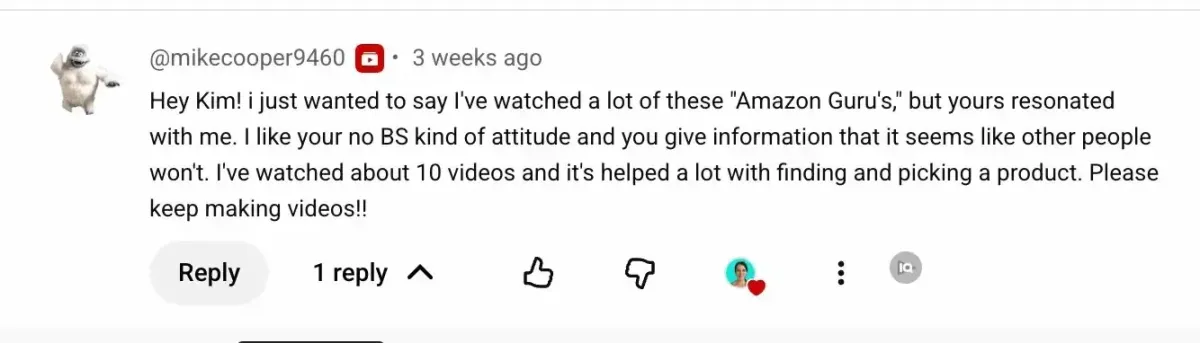
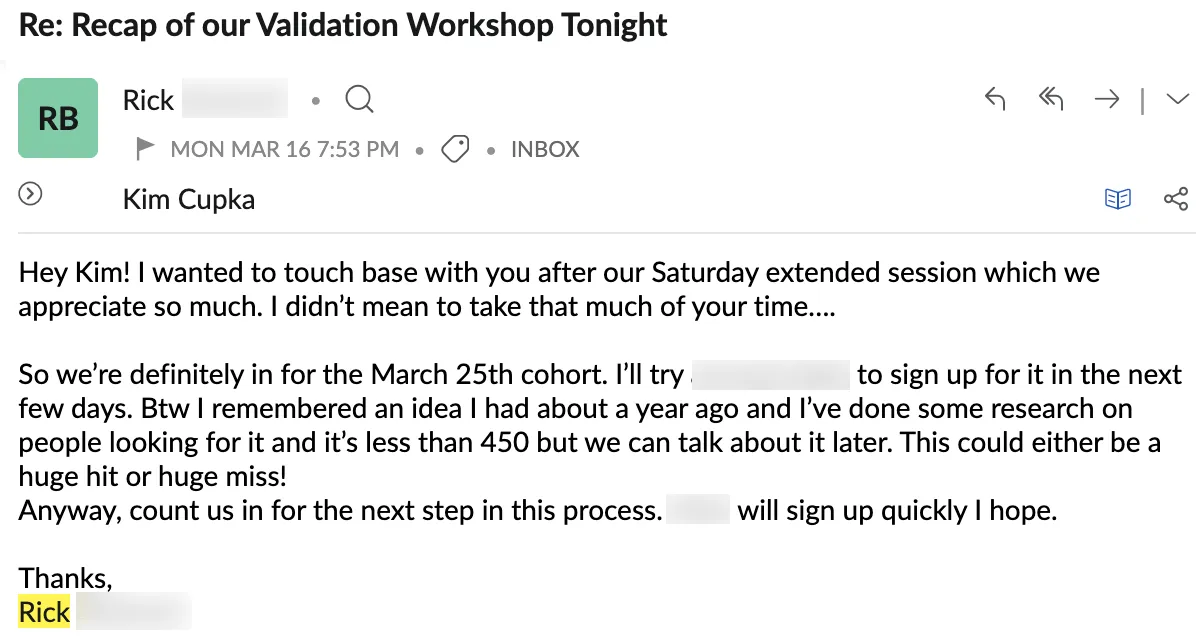
From Rick, after our validation workshop
You Could
Figure This Out
Yourself... But...
You'd need to:
- Spend months piecing together advice from YouTube videos, Reddit threads, and Facebook groups (most of it contradicting itself)
- Pay thousands for a private label course that teaches the 2016 version of this
- Order inventory on a product you're not confident in and hope it works out
- Make the margin math mistake that kills most first launches
- Do all of that while still running arbitrage just to keep the lights on
I've already made those mistakes. Some of them twice. (The wholesale detour alone cost me six months and broke even at best.)
Or you can get the whole framework, in one place, for $7.
Here's exactly what I walk you through. Step 1, find where real demand exists and no good product does yet. Step 2, find the right people to actually make it for you. Step 3, list it on Amazon the right way so you're building a real brand, not just another listing.
Here Are 5 Things You'll Discover Inside From Reseller to Brand Owner:
- The exact question that separates brand owners from resellers... and why most arbitrage sellers never think to ask it (hint: it has nothing to do with the market, and everything to do with you)
- Why private label fails (and it's not the model) the actual reason smart, hardworking sellers flame out trying to go private label, and the one mindset shift that changes the entire outcome
- The Three Pillars you must pass before you spend a single dollar... skip any one of these and you're not building a business, you're buying an expensive lesson
- The 40% rule that protects you from financial disaster... the margin framework I use before I ever talk to a supplier, and the exact math that tells you whether an idea is worth building or worth walking away from
- Your complete 90-day transition plan... week by week, what to do and in what order, while arbitrage keeps funding everything in the background
Here's the Deal
Don't Do What I Did
I wrote this book because I wanted to give serious Amazon sellers a framework that actually works in today's market. Not a theory, not a hype-filled course promise, but a repeatable method with real numbers and a real roadmap.
I've cut out everything that doesn't matter so you can read this in one focused session (the audio book version is less than 60 minutes!) and take action immediately. The 90-day plan starts the day you finish it.
Don't let the $7 price fool you. Hundreds of hours of building, testing, failing, and rebuilding went into the method inside this book. The price is low because this is the beginning of a relationship, not the end of one. I want you to read it, use it, and come back when you're ready for the next step.
Don't spend six months on wholesale, break even, and walk away wondering what went wrong. Don't launch a private label product using 2016 logic and watch your savings evaporate into a listing that goes nowhere. Don't test random product categories with no connection to anything you actually know. Don't keep driving to every Ollie's within a two-hour radius and telling yourself you'll figure out the next step eventually.
I've made those mistakes so you don't have to. And I've packaged everything I learned into something you can read before your next sourcing session.
The Price: Just $7
Yep. Seven dollars. Less than a used book on Amazon. (Extremely on brand, I know.)
This price will not stay here. I'm using this ebook to introduce serious Amazon sellers to my method and my world — and $7 is the price that makes it an absolute no-brainer for anyone who's genuinely ready to make this transition.
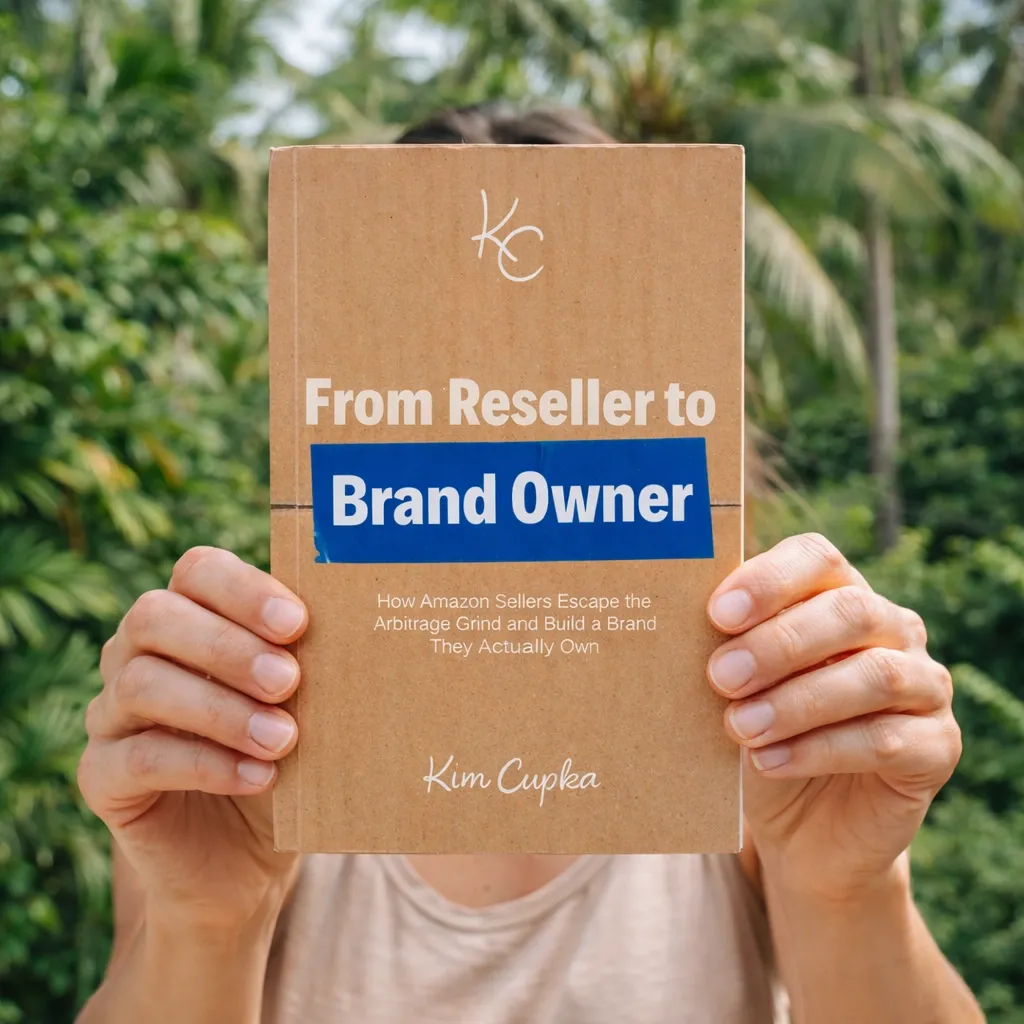
Still Not Sure It's Worth $7?
Here's what's waiting for you inside:
- The reason your arbitrage income will never compound... and the structural shift that changes everything (this alone will reframe how you see your business)
- The "unfair advantage sandwich"... the real reason my toy spray mop sold 23,000 units in year one, and how to find your version of it
- The market gap research method that uses customer reviews as the most honest market research you'll ever find — and how to spot a gap before your competitors do
- The exact startup cost breakdown... the real numbers, low end to high end, so you know exactly what you need before you start (no $50K nonsense here)
- The supplier conversation framework... what to ask, what to watch for, and the sample strategy that saved me from at least one $5,000 mistake
Why Is This Only $7?
Because this ebook is the beginning of a relationship, not the end of one.
I built this to put the One Product Method in the hands of every serious arbitrage seller who's ready to stop grinding and start building. The $7 price removes every reason not to start. And if you love the framework and want to go deeper... into validation workshops, supplier conversations, and full build-out coaching... that's all available when you're ready.
But that's later. Right now, for $7, you get the whole roadmap.
If You Want a Brand That Runs Without You Sourcing
Every Day...
...then this is the most obvious $7 you will spend this year.
Let's Talk About What $7 Actually Is
| What's Included | Value |
|---|---|
| From Reseller to Brand Owner — Complete Ebook | $27 |
| The One Product Method Framework (3 Pillars, In Order) | $47 |
| Your 90-Day Transition Roadmap | $37 |
| Real Startup Cost Breakdown (Actual Numbers, No Fluff) | $17 |
| Minimum Viable Margin Framework + How to Run It | $27 |
| Supplier Conversation + Sampling Strategy | $17 |
| Total Value | $172 |
| Your Price Today | $7 |
My Guarantee
Read this ebook. Do the work. If you don't walk away with a clear framework, a real understanding of why your current model has a ceiling, and a 90-day plan you feel genuinely confident about... email me and I'll refund every dollar.
No questions, no hoops, no awkward conversation. I'm that sure this is worth your $7 and then some.
I built this to help people. If it doesn't help you, you shouldn't pay for it.
It's one bag of jelly beans (the really bougie ones). It's a fraction of what you spent on your last arbitrage sourcing haul. It's approximately 1/1000th of what a bad private label launch costs when you skip the validation work this ebook walks you through.
And it's the framework that took me from sticker peeling at 10pm to living in Costa Rica with a brand that runs itself.
Here's everything you're getting:
This Price Won't Be Here Forever
I reserve the right to raise the price whenever I feel like it. (I'm my own boss now, that's kind of the whole point of this book.) So if you're reading this and the button still says $7, that's your window.
One Last Thing
The arbitrage grind will still be there tomorrow. The Ollie's will still have clearance shelves. SellerAmp will still scan barcodes.
But every day you spend running on the arbitrage treadmill is a day you're not building something that compounds.
I spent too long thinking the next great ASIN was going to be the thing that changed everything. (Spoiler: It never was.) What changed everything was building one product, the right product, using a method that was designed to work.
That's what this book is. And for $7, it might be the best thing you do for your business this month.
I'm rooting for you. Genuinely. Let's build something real.
- Kim Cupka, former retail arbitrager, Amazon brand owner, and person who has personally peeled more stickers than any reasonable adult should ever have to.